A Year Long Picnic (2022-2023)
Book – Thesis
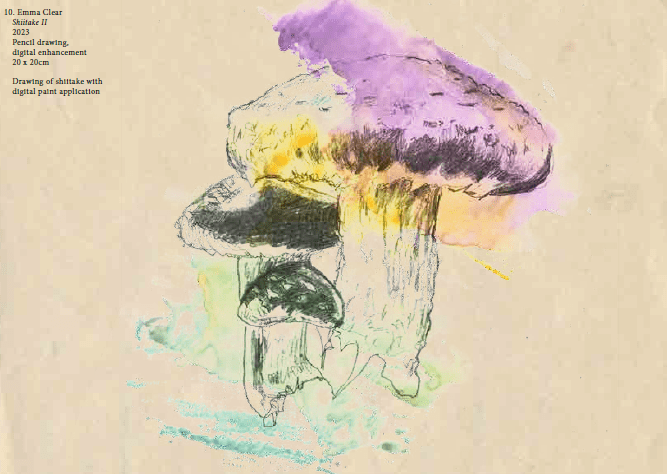
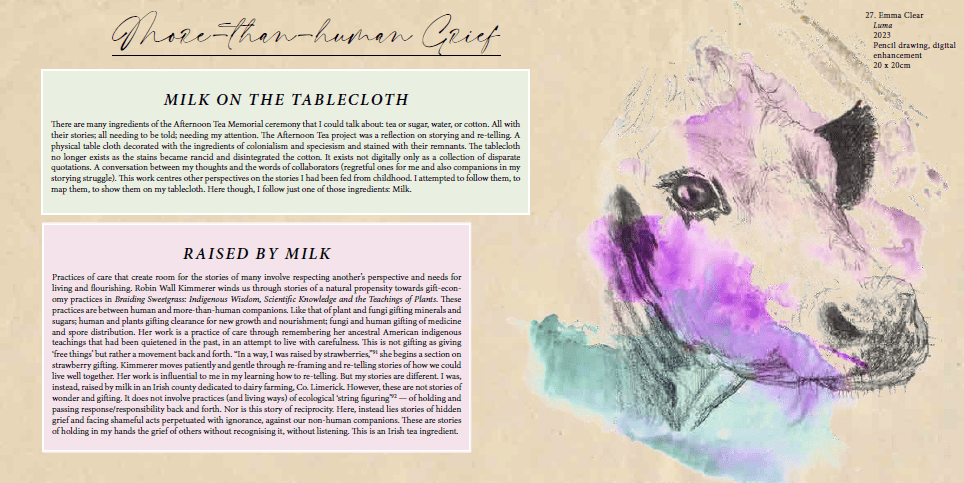
This work is an analysis of the processes of grief and resilience strategies through the lens of feminist food and care practices. The thesis is divided into four seasonal picnics which transverses personal writings, reflections and critical analysis of care practices as I navigated the personal loss and grief. It journeys through the experiences of grief, isolation and fatigue of living in climate and social unravelling. This text questions whether what was learned during my personal grief journey could be translated into more broadly applicable strategies for building resilience in difficult times. Each seasonal picnic brings together a chapter of growth towards strategies for resilience building. I prepared food, found comfort; developing recipes for careful living with colleagues and companions, human and more-than-human collaborators.
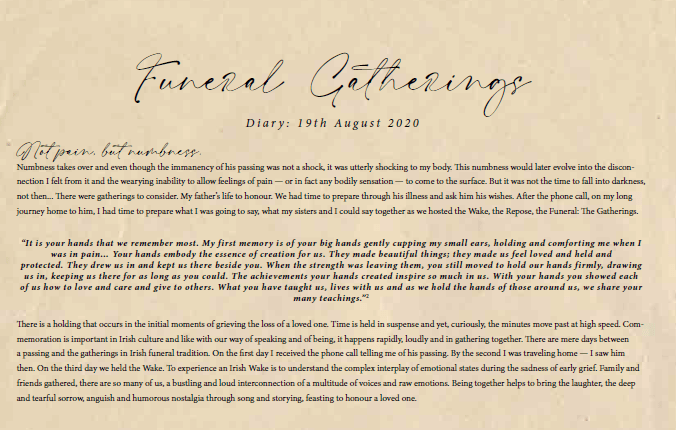
[Book design: Petri Inkinen, Emma Clear. Content (text, images, drawings): Emma Clear. Other content: various sources (credited in book)]
recipes for care & resilience in the climate emergency (2021-2022)
Collaborative Book Project
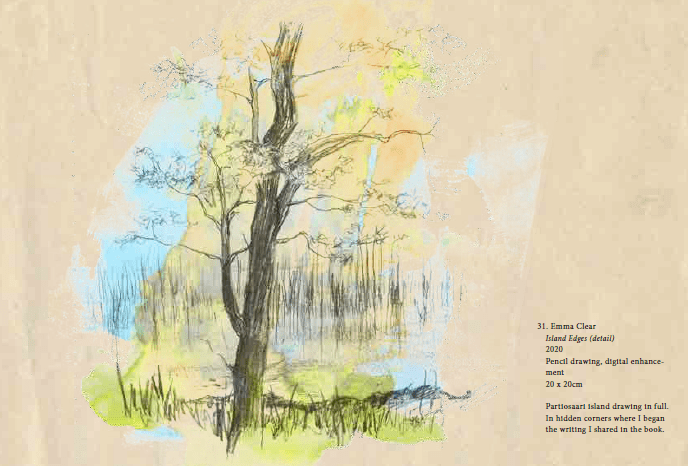
What is resilience? In recent years, it is a word that has swirled across disciplines; a word that has sought to provide us with strength, comfort and agency in what is often called ‘troubling times.’ But, what does resilience look like, behave like, in the everyday? In early summer 2021, a group of transdisciplinary Aalto University students and faculty, came together with invited artists and practitioners on Partiosaari – a small island in East Helsinki, Finland. There we stayed with the discomforts and difficulties associated with the climate crisis in an attempt to navigate the present moment, towards a movement of resilience. To us, the island became a micro-ecology of environment, emotion and experience; a pause from the vastness of the world’s frictions where we could take a moment to reflect. There, we gathered together with food, at the table and by the fire. We brought ingredients with us and created recipes for sustenance, care and compassion. What we found was both challenging and nourishing; how we came together was unexpected and unforeseen. From these experiences a recipe book was formed. This book is a collaboration and combination of our ingredients, edible and experiential. A recipe book for resilience building – for moving with resilience – in difficult times.
https://online.fliphtml5.com/mdloh/msit/
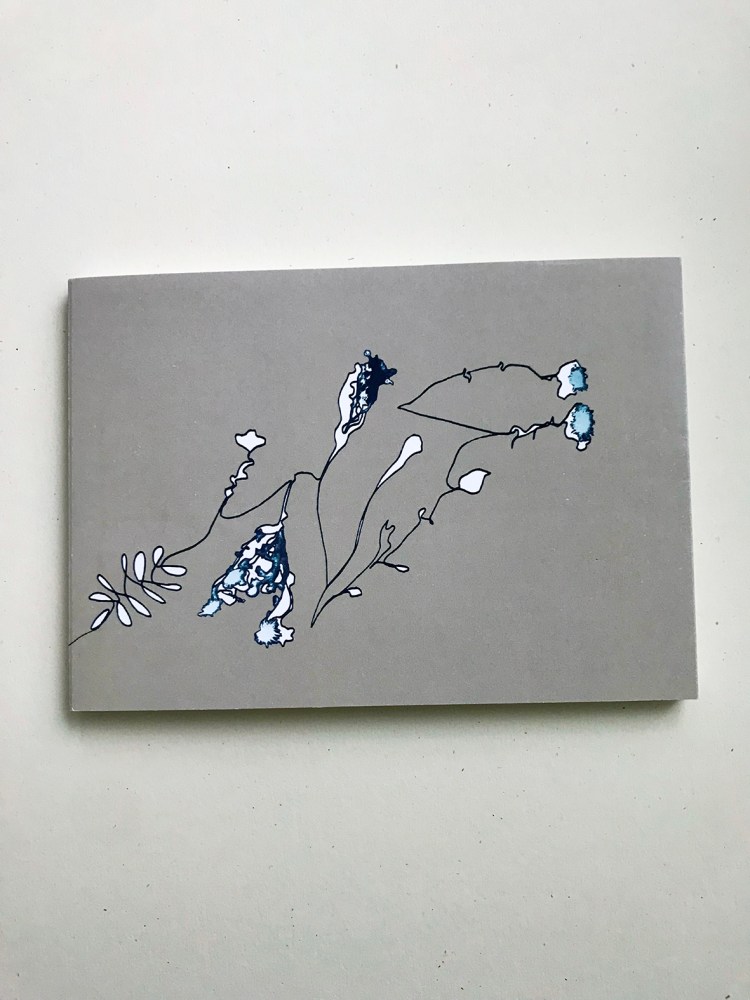
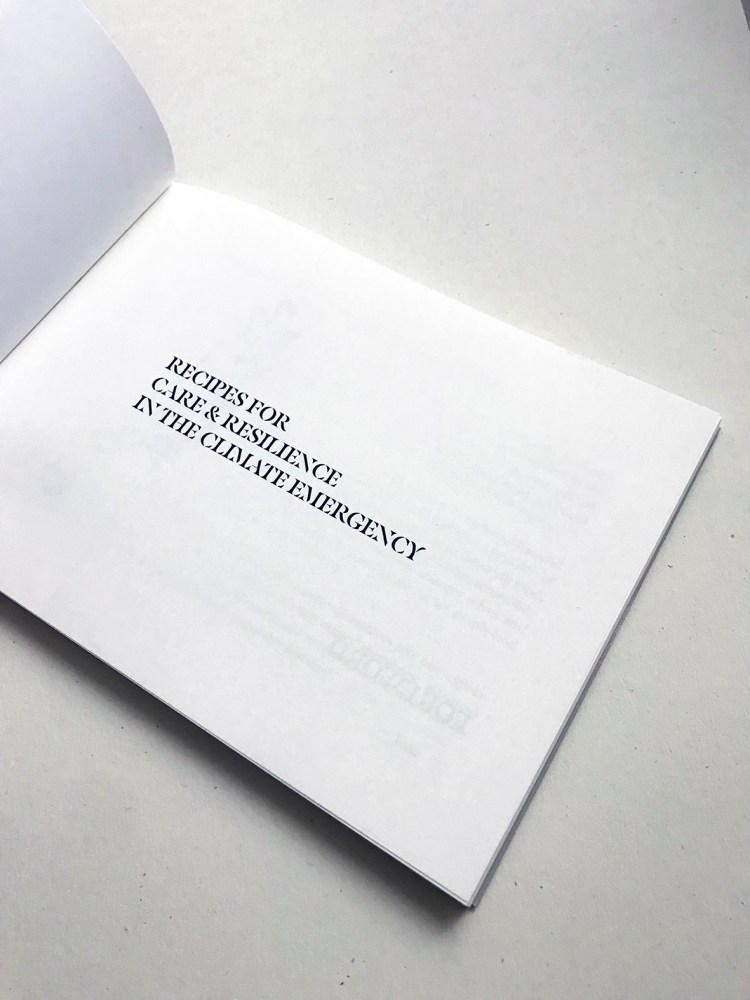
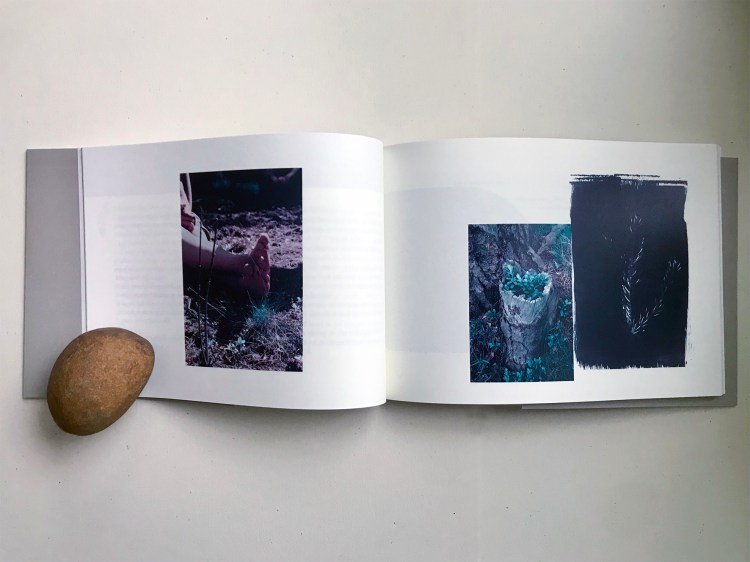
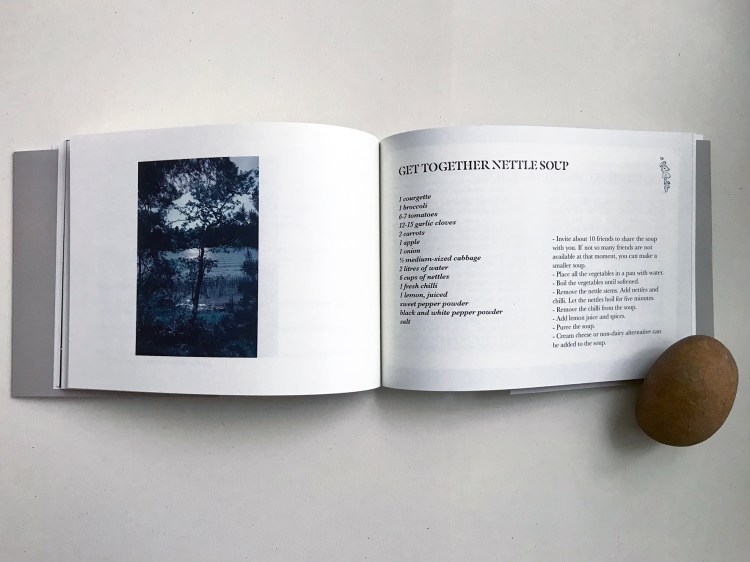
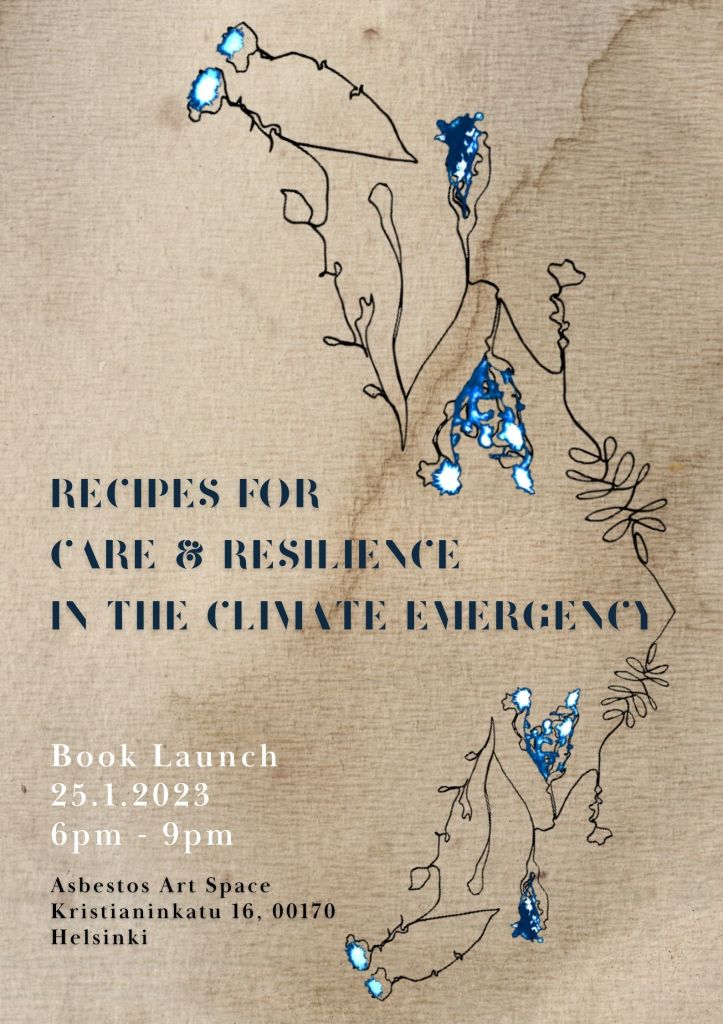
[Book design: (working group) Mónica Celeste, Emma Clear, Stella Martino, Martta Nieminen, Selina Oakes, Florencia Pochinki, Bailey Polkinghorne, Elina Priha, Heini Uusisilta-Immonen, Tuula Vehanen. Content (texts and images): working group + Lucy Davis, Julia Lohmann, Sanni Saarimäki. Promotion images: Elina Priha. Launch poster design: Emma Clear]
Afternoon Tea (2021)
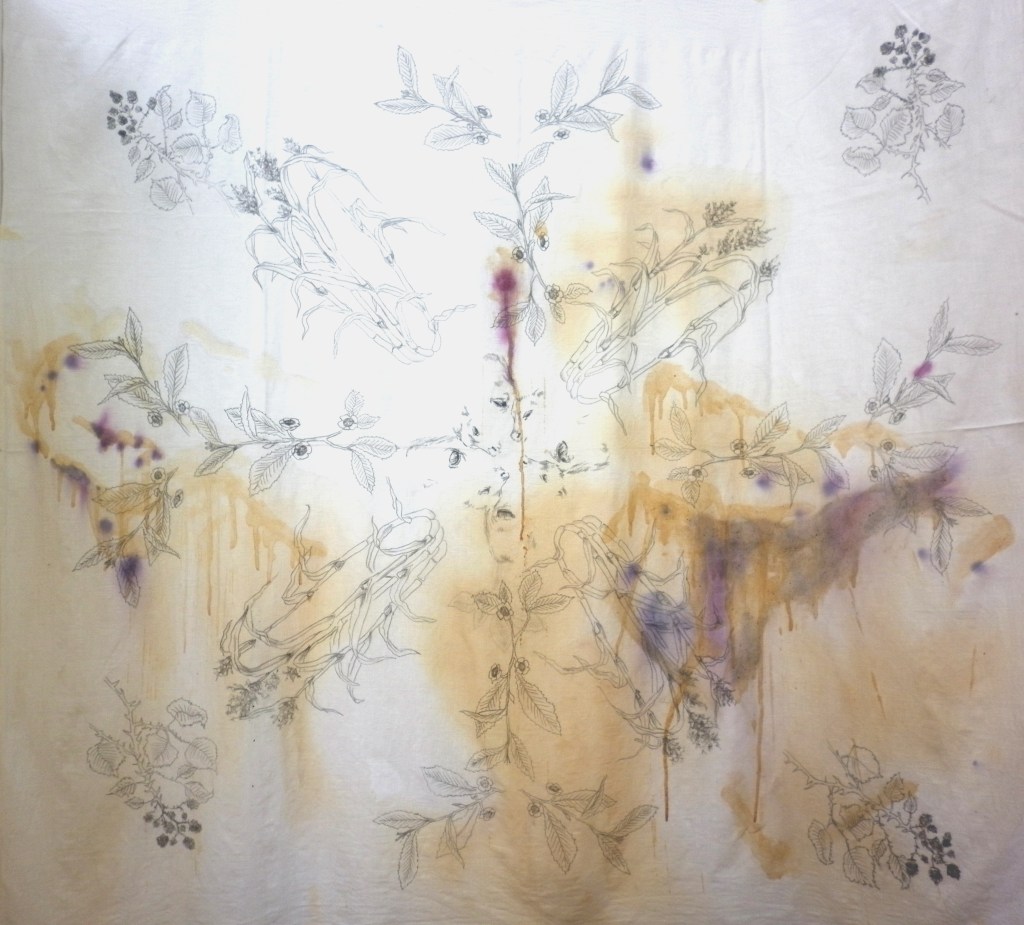
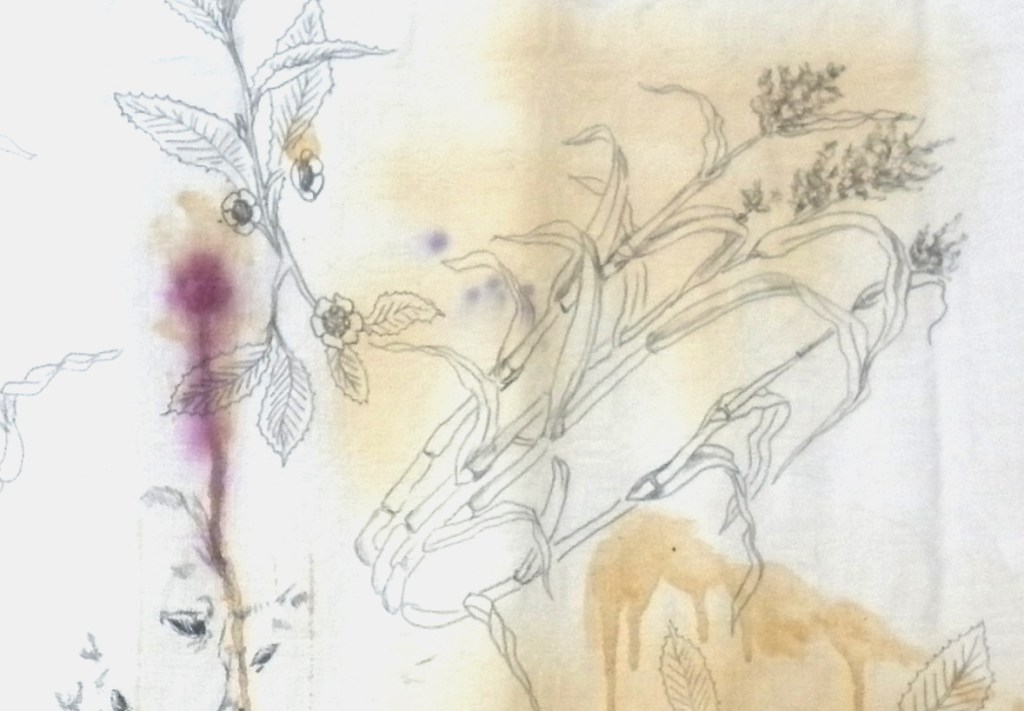
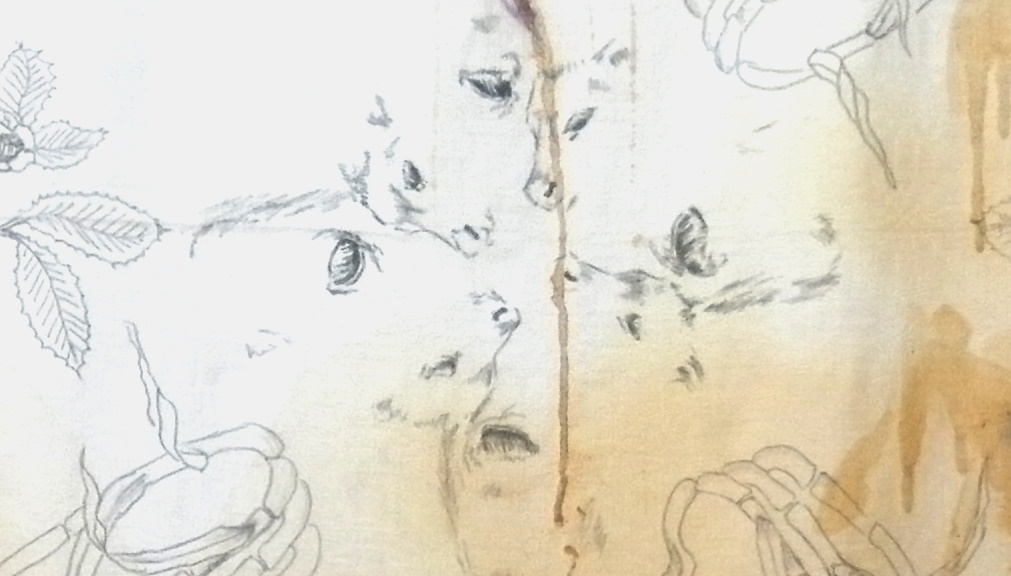
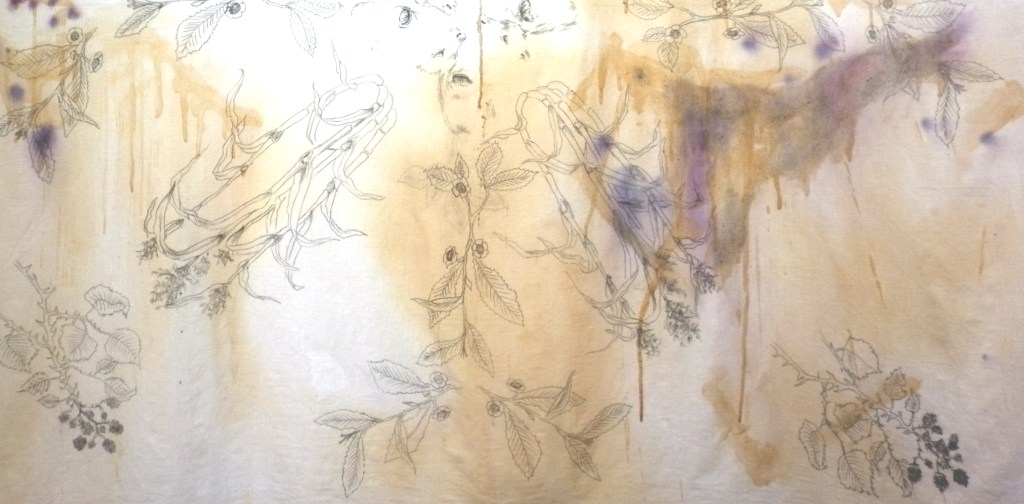
Tablecloth: linen cloth, pencil, tea, sugar, blackberry juice, milk stains; 120cm x 120cm
Tea is integral to my mother culture and during times of vulnerability, tea is overflowing. Coming together with tea – as event, as substance, as ingredient – is intrinsic to how my family have gathered together over years. It is part of every gathering – big and small – every visit and happening. In vulnerability, coming together with tea invokes comfort and familiarity. It warms the belly, filling-in feelings of hollowness and anguish. But it is layered with complexity and complications. Ladened with complicated ingredients. Afternoon Tea feels heavy and stained with spillages of colonialism, privilege, unconscious consumption, status, family, bias and grieving processes that permeate and percolate. To work with the ingredients of “Afternoon Tea” is to digest the stains of it, the connections and mapping of it. The work “Afternoon Tea” is a drawn and painted tablecloth, digitalized and deepened with a collection of quotations, thoughts and memories that connect back to drawings and stains of tea ingredients. The tablecloth showing multiple maps of the grieving involved in its making. A collective ceremony of complications and collaborations, of comforting and discomforting elements. The project involves images and stories of tea, tangling words together; allowing for multi-storied perspectives on the ingredients of an afternoon’s tea.
https://prezi.com/view/w8WsB4G2BSyI9MwAd0fD/
Spinning Yarns (2020)
Video work: 6min 26sec
I am not a lace maker but I make lace yarns to help tell stories. I am not a knitter but I knit and tangle with the yarns that were given to me. I am a crochet maker; I make knots and patterns with the yarns of the past. I am a map maker; I draw the patterns of lives that were hidden for so long. To ‘Spin a Yarn’ means to tell a story. I spin yarns with my work. When I tell stories I think through the lineage and patterns that tangle craft stories together. Lines come together to create drawings and text; yarns knot and tie complex narratives together through crochet, lace and knit; blood-lines tell stories of behaviour patterns, knotting family tales with wider social and cultural structures. The patterns created reveals holes and gaps in the stories and invisible histories within the spaces between. I am not a lace maker but I make lace yarns to help tell these stories.
The Shadow of the Good Shepherd (2020)
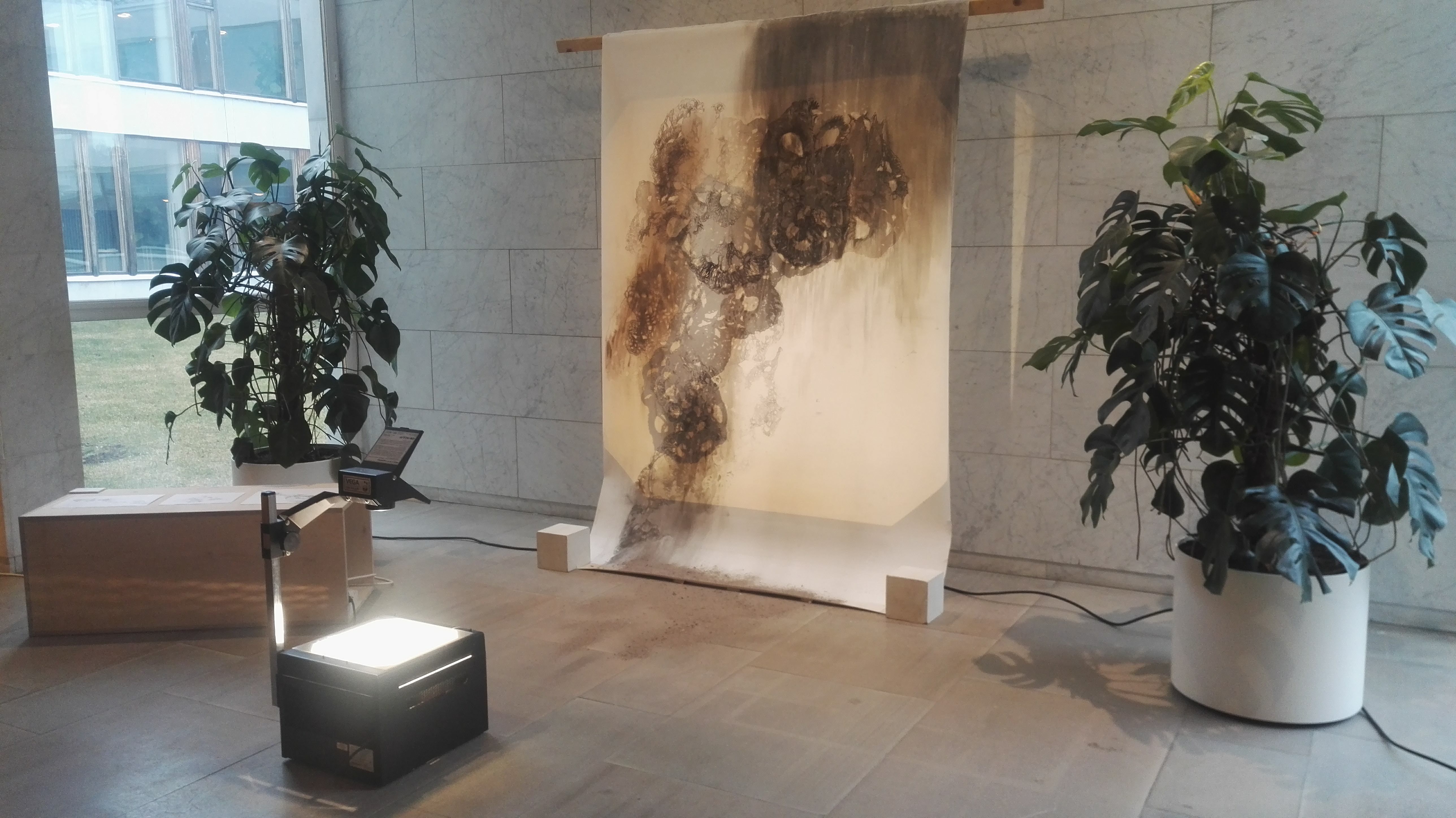
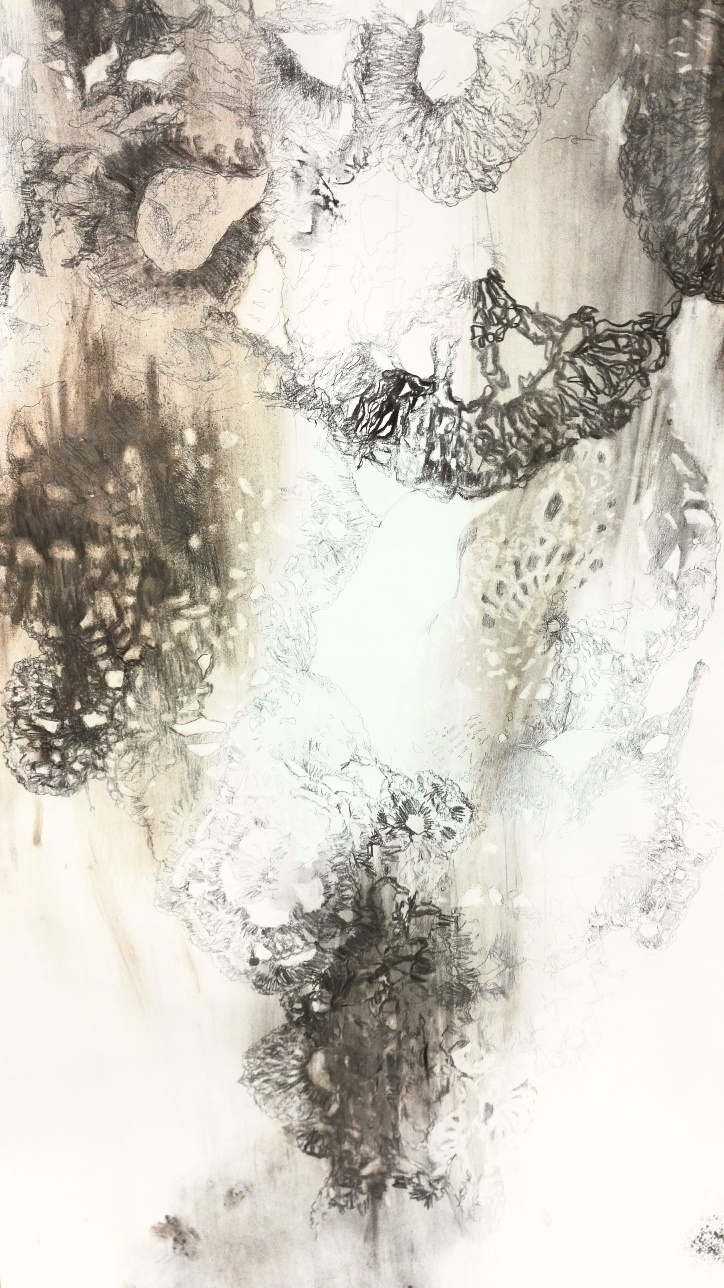
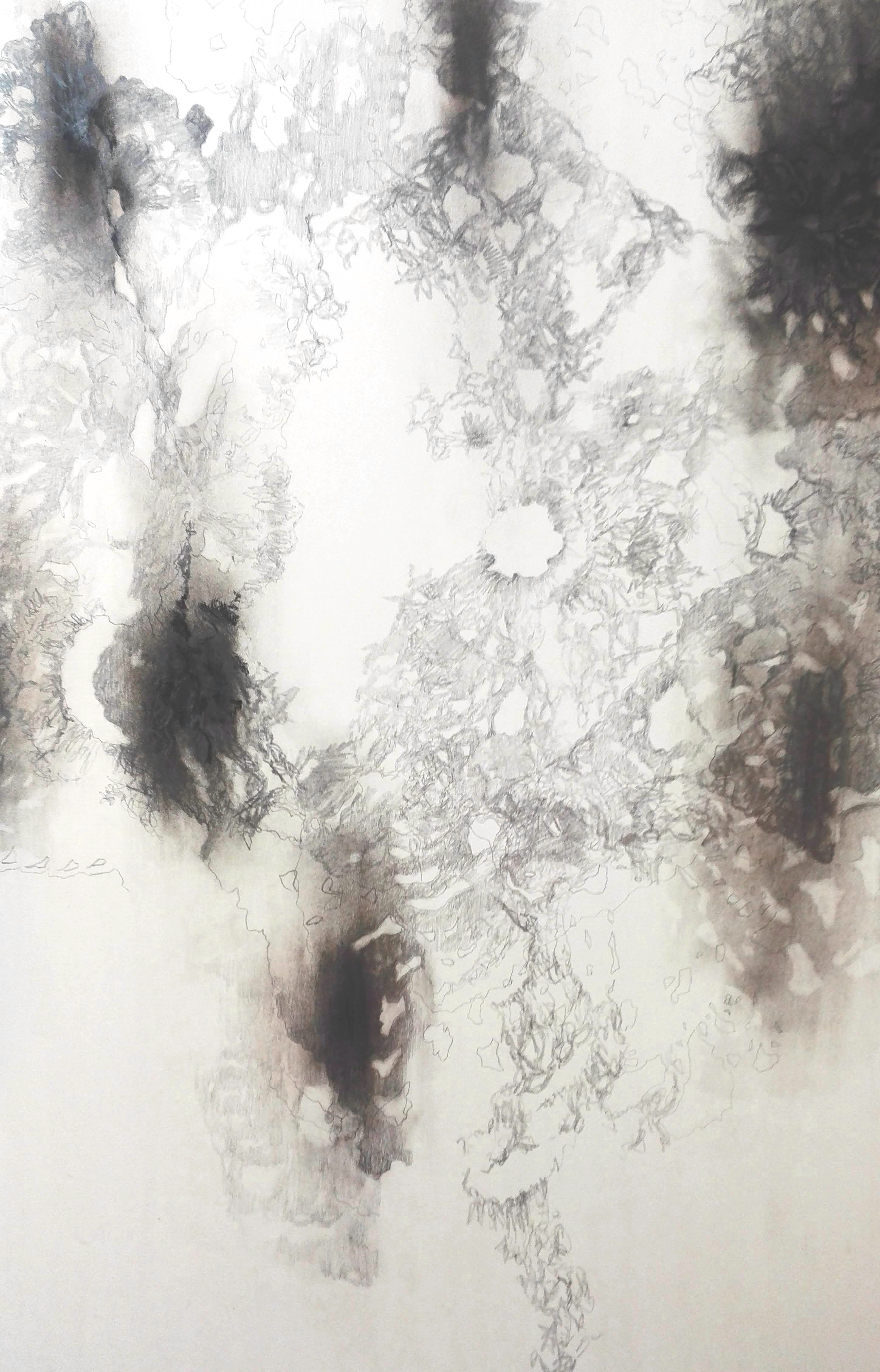
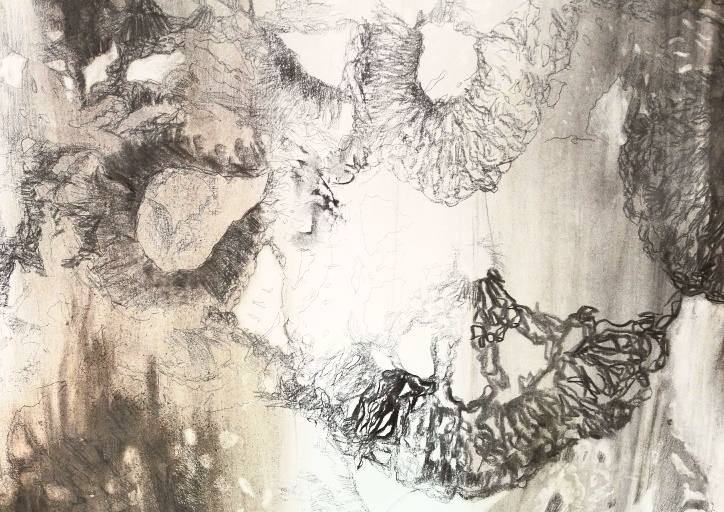
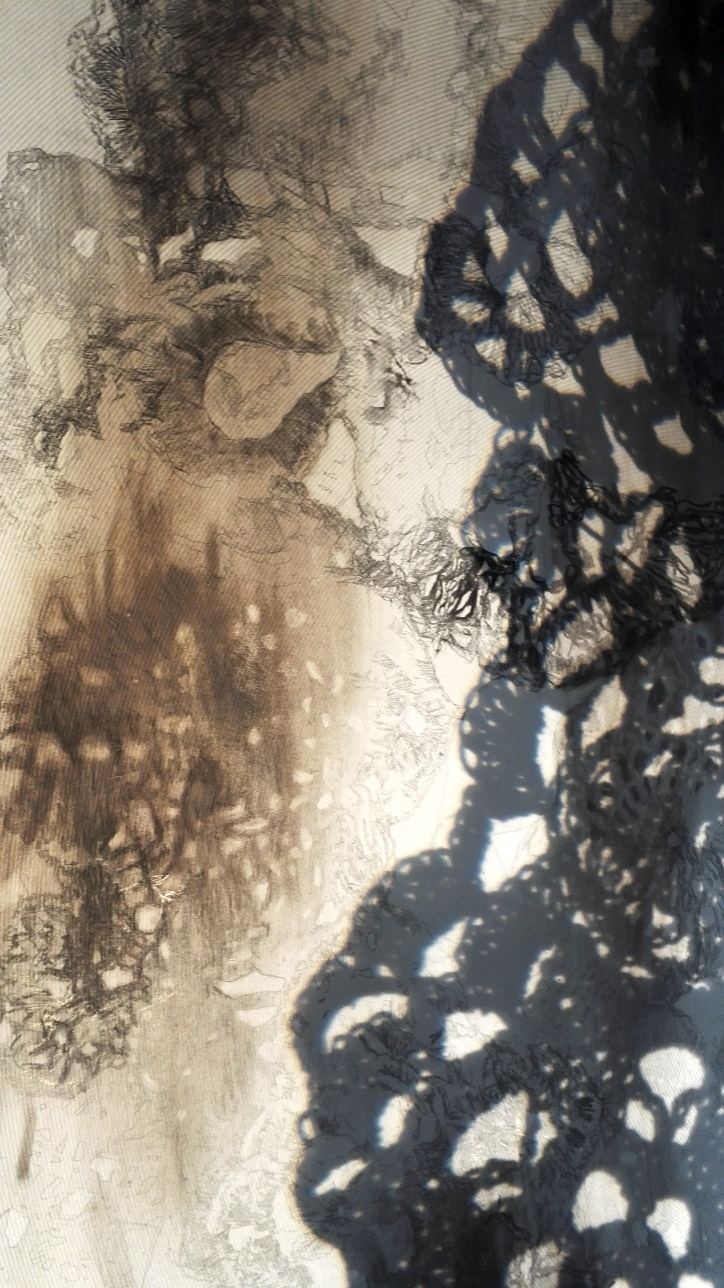
Drawing Installation; paper, pencil, charcoal, ash, overhead projector, crochet works; (large work) 126cm x 257cm
Follow a thread, follow a line as it weaves in and out of shadows. Pull the thread; unravel it; Re-knot it; Tangle it up. Remember those lost in the knotting and shadowy past. May they not be forgotten. These works focus on telling stories of forgotten makers of lace. Forced to create beautiful yarn-works in servitude and captivity. Families forced apart and hands forced into labour. These are the stories of the women of the Good Shephard Convent in Limerick and other mother and baby homes across the country of Ireland. I entangle these stories with traditional craft making, contemporary drawing and feminist writing to complicate issues of craft and care, of the reproductive rights of women of my generation and before. This series of works are a collection of mapped sites in Ireland where shadowy stories have emerged, telling a broader history of reproductive rights in Ireland and those lost within it.
Crochet Neurology (2018)
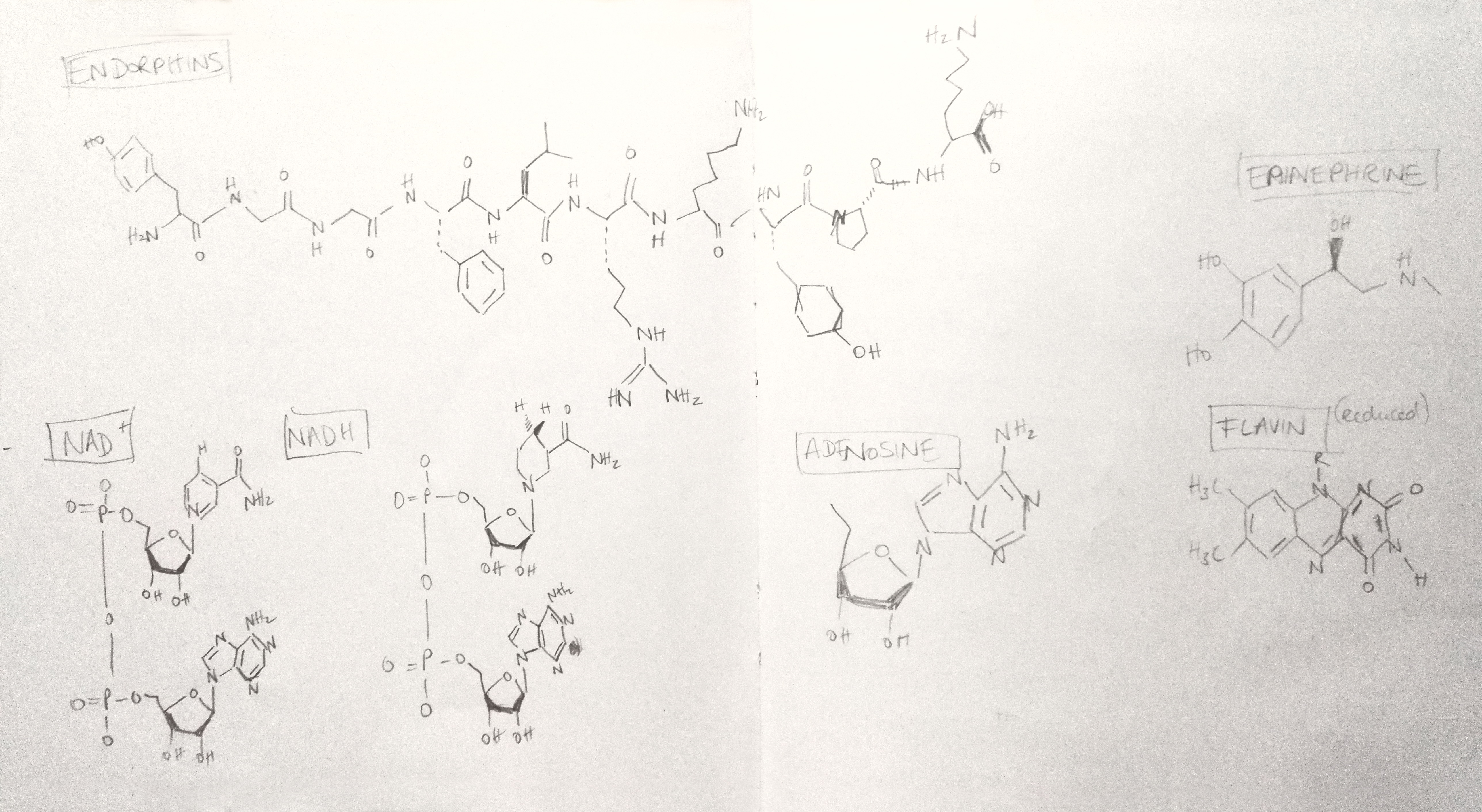
Yarn Installation; cotton yarn
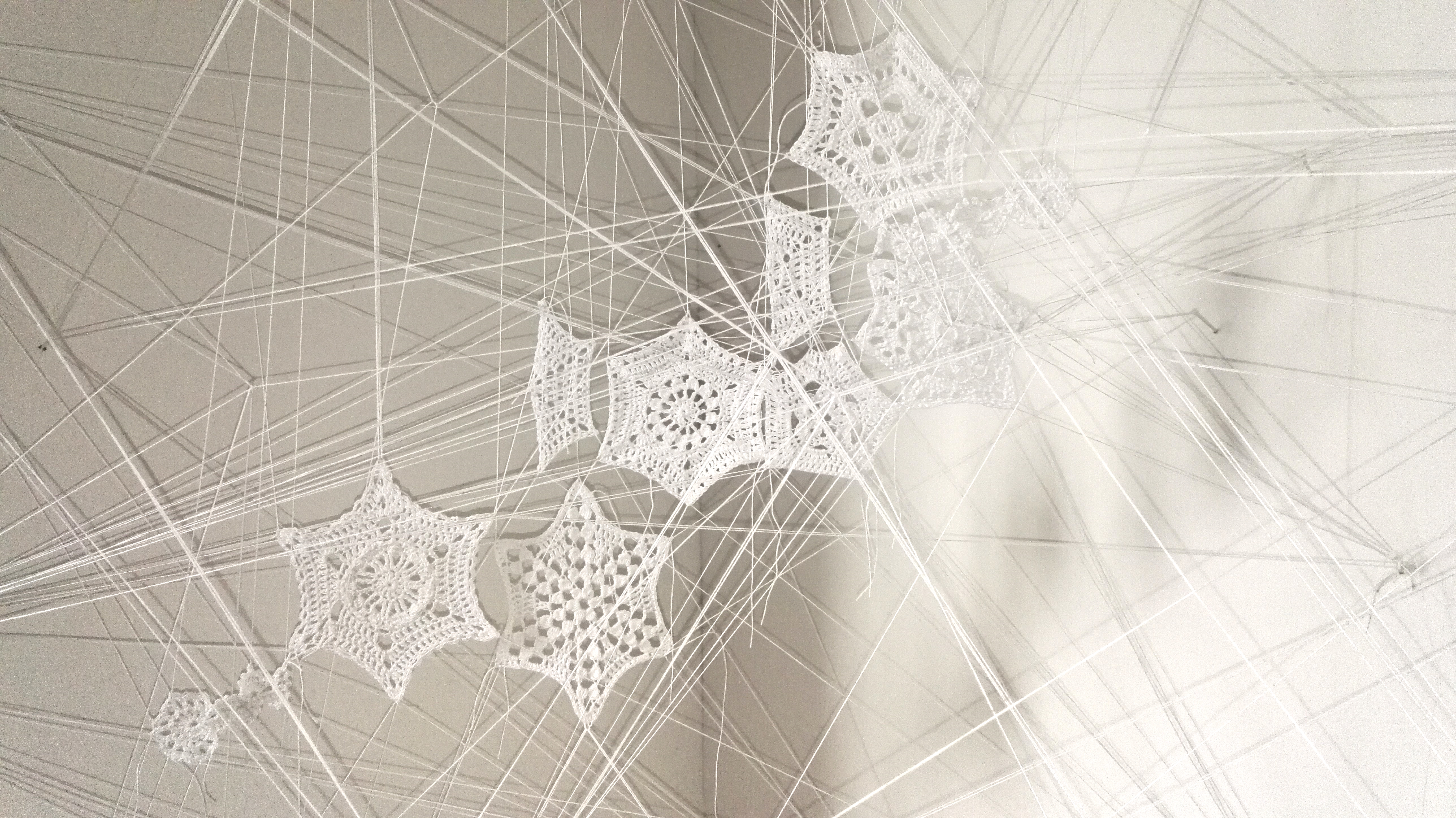
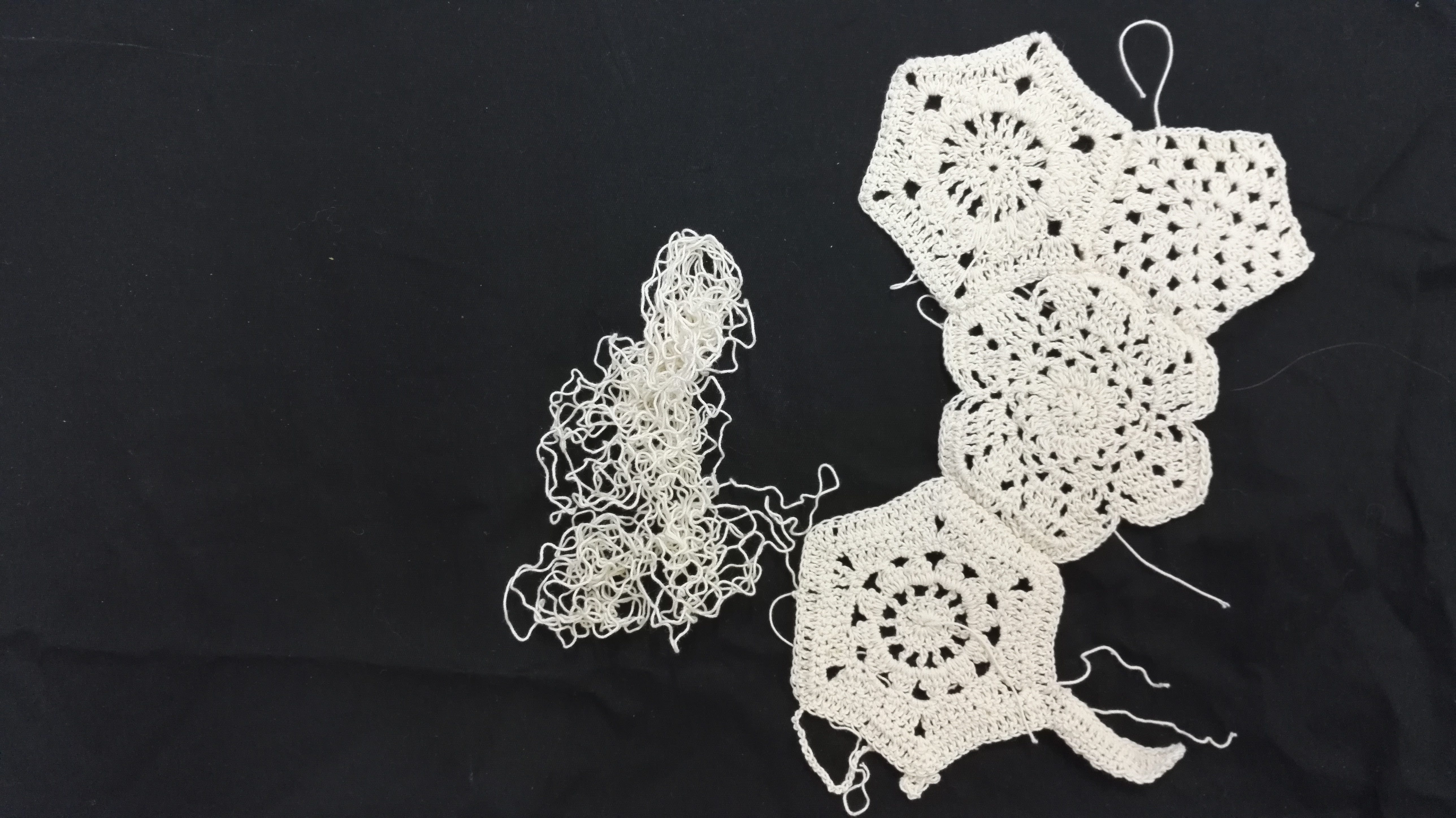
Patterns persist in our minds and our actions. In craft and patterns of behaviour I find threads to neurology patterns. Trauma and behaviour patterns persist through generations and through cultures. With this work I web and crochet hormone molecules and neural connectivity, weave through the combination of molecules that allow for empathy and solidarity, disconnection and discomfort. I wonder what patterns develop as our experiences tangle with our emotional interpretations of them; how these patterns manifest in our bodies; what patterns lay within the smallest molecules as they rush our body, influencing us moment to moment. This work explores materials and methods, sensation and physical experience as I use crochet techniques to visually illustrate the chemical structure of Serotonin, dopamine and the structure of stress hormones in the body.


Dimensions: Patterns (2018)
Yarn Installation – Performance; cotton yarn, crochet works, ratan chair
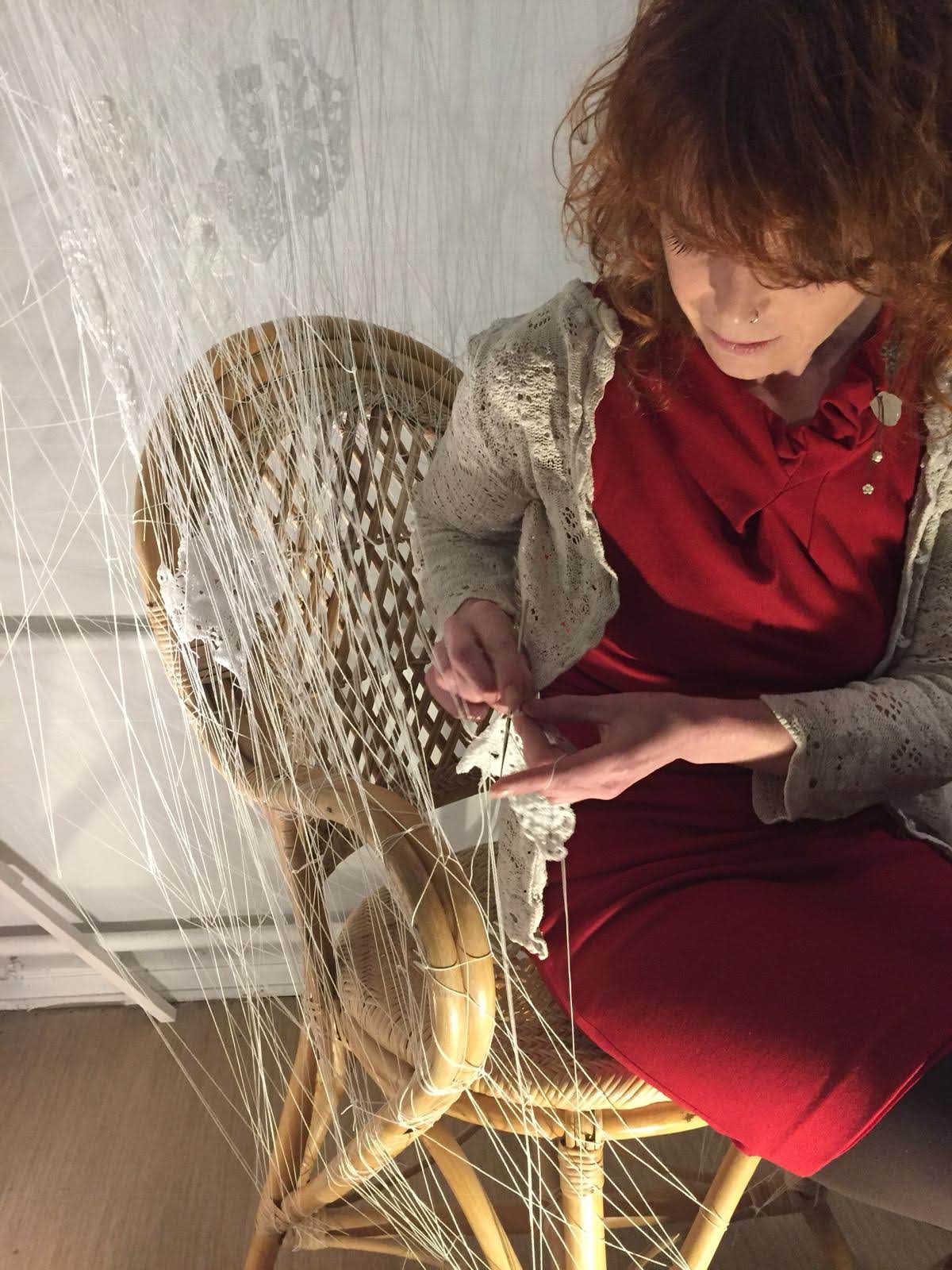
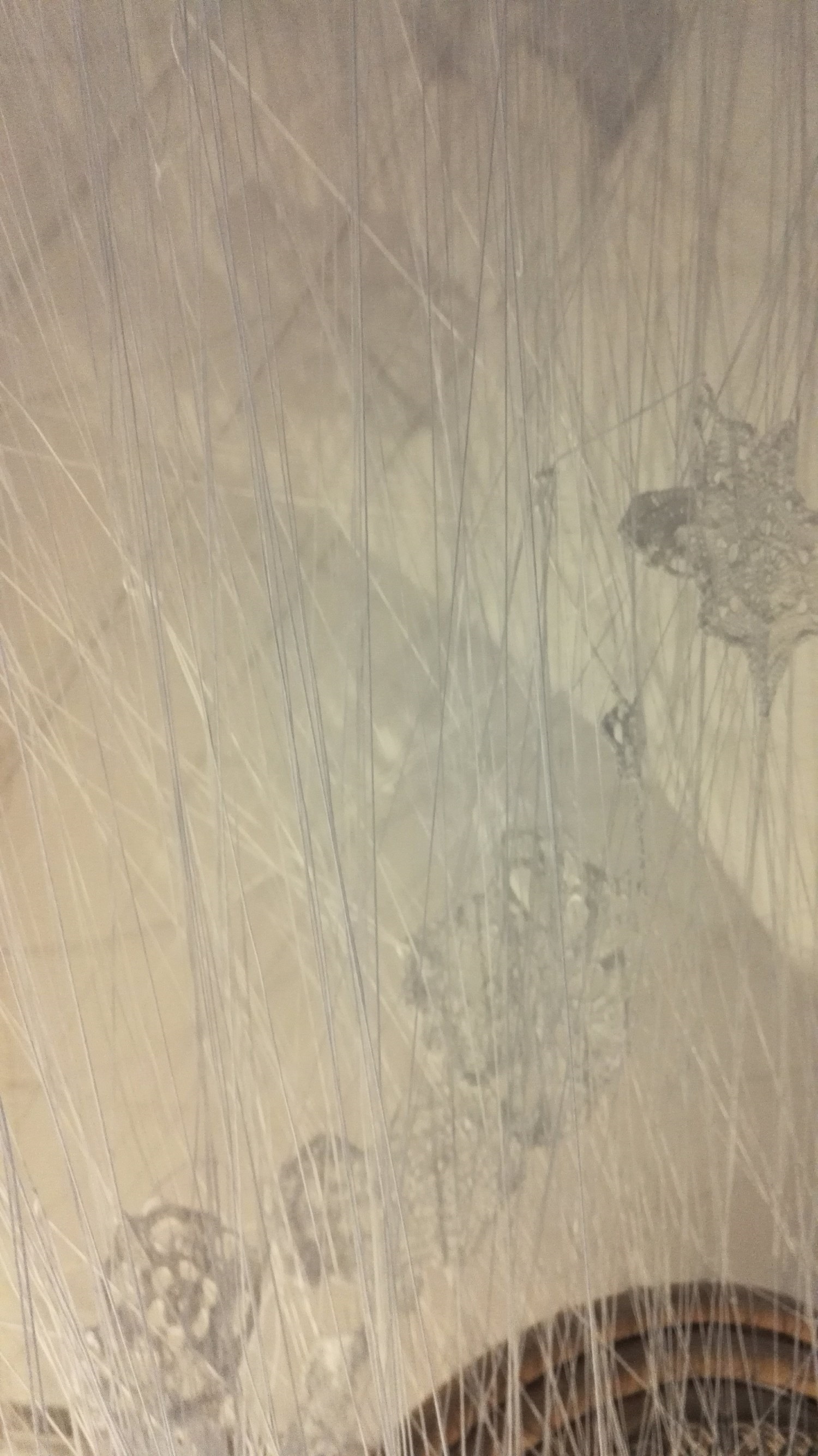
Generational trauma and behavioural patterns moving between family members is the theme of this work. In a building on the grounds of the former mental institution at Lapinlahti in Helsinki, I crocheted myself to my work. I crocheted myself to the neural patterns of the past as I told the stories of my personal connection to family ties and knots, patterns and familial histories.


Trace: Cailleach (2016)
Yarn Works: Cotton yarn; 42cm x 57cm
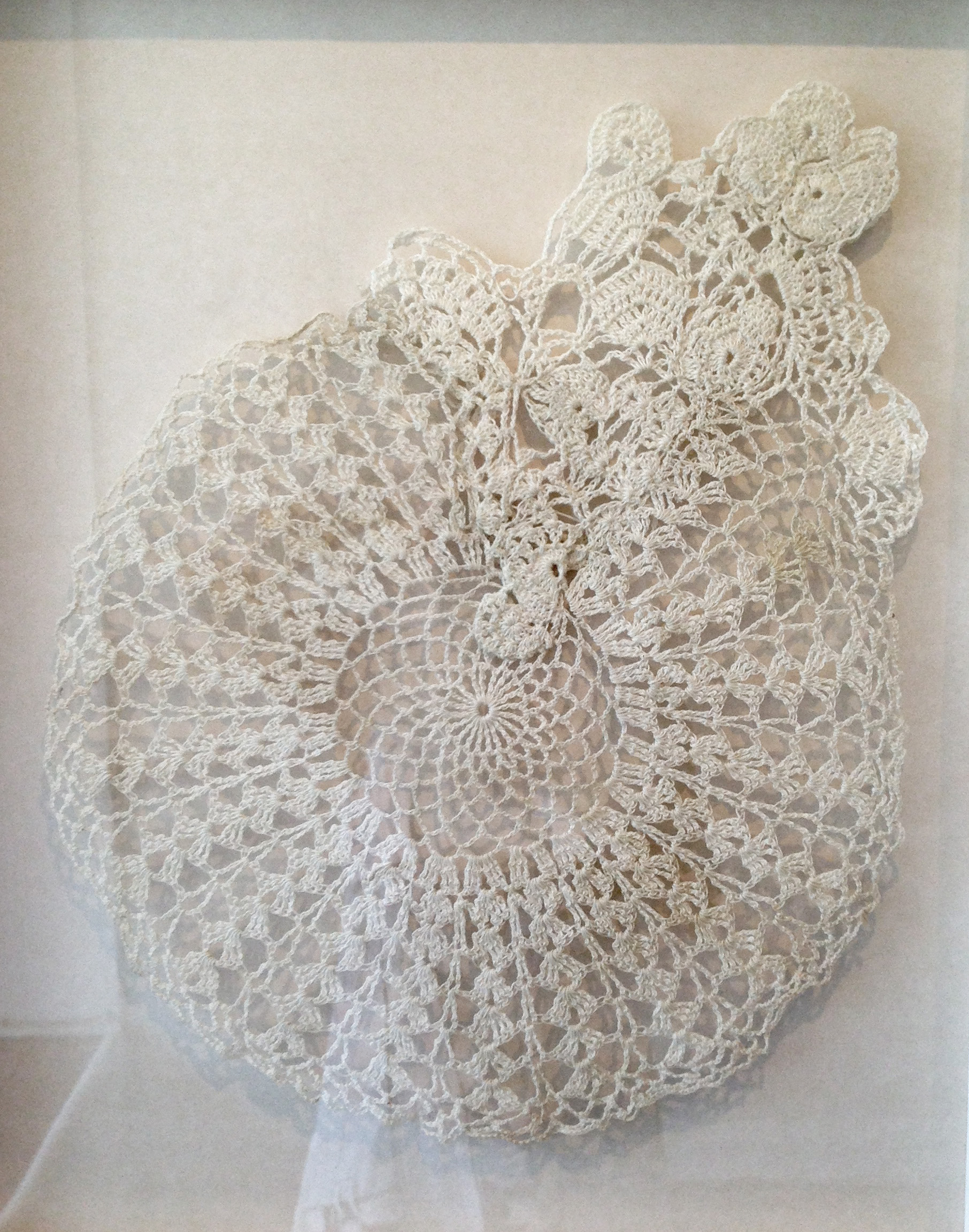
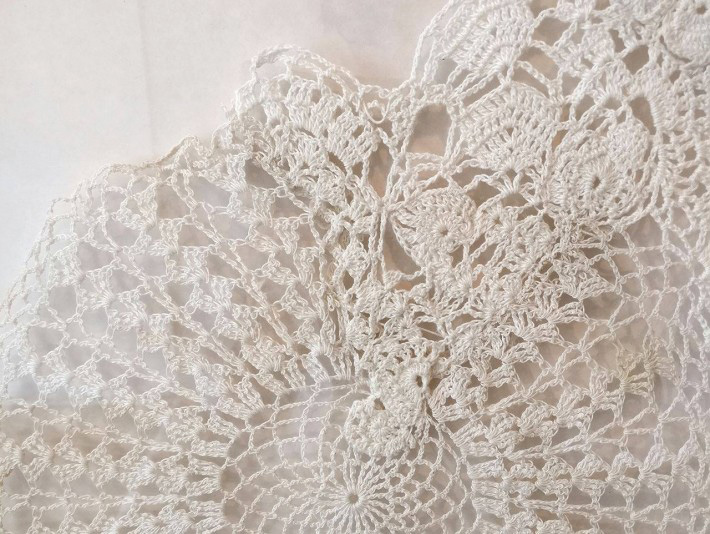
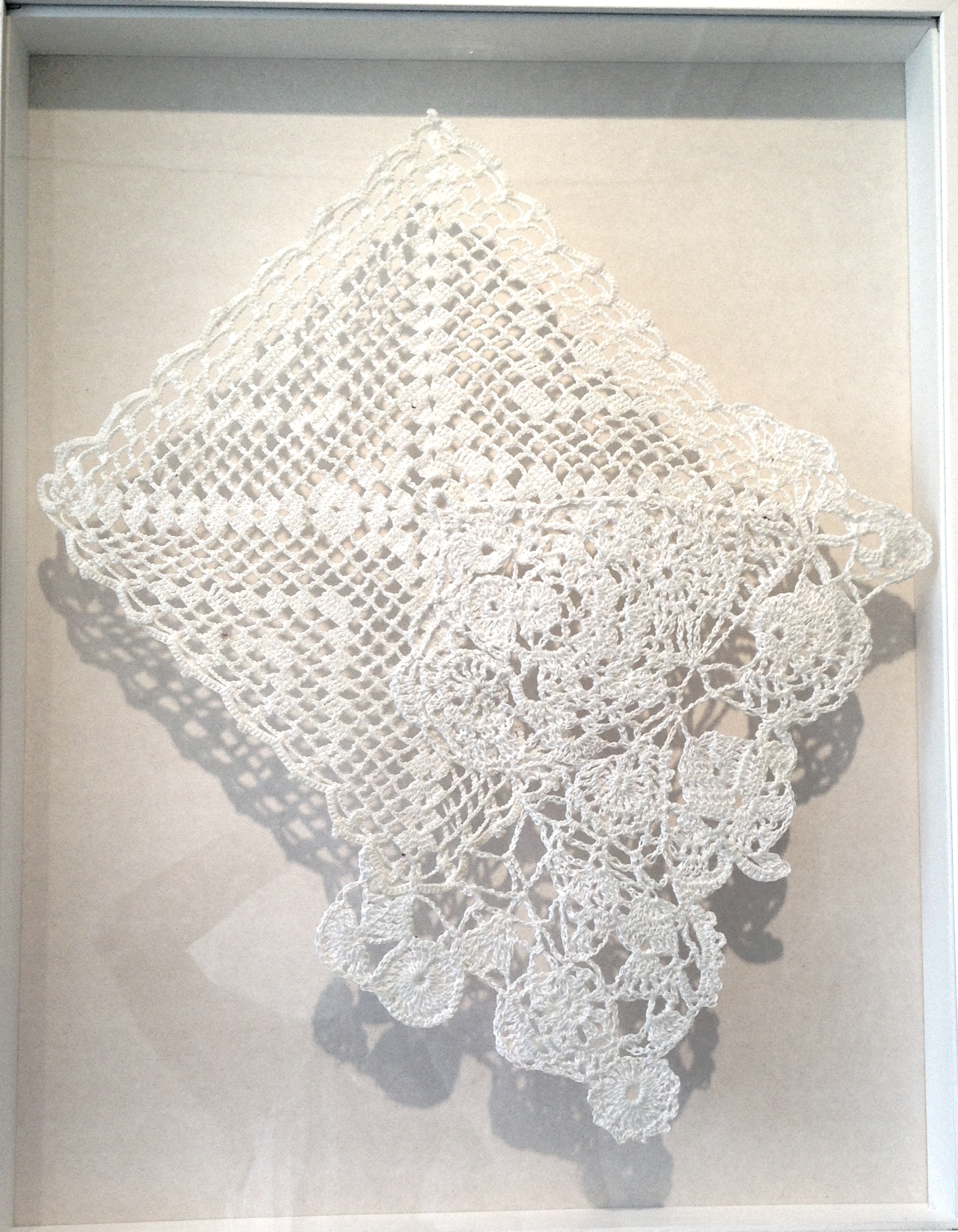
‘Cailleach’ meaning crone in Irish. Working ‘free-form crochet’ to my grandmother’s crochet from the 1930’s, led to the creation of “new family heirlooms” and a deepening of my interest in lineage and patterns, familial stories and histories.
Trace: Maighden (2016)
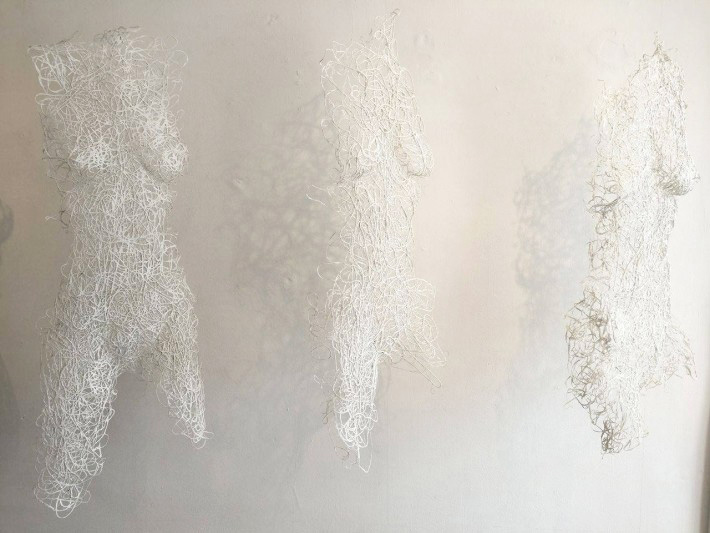
Yarn Sculpture installation; cotton yarn body casts; approx. 40cm x 110cm
‘Maighden’ meaning maiden in Irish. This series communicates delicacy and femininity, bloodline and pattern. Repeated body casts of lace-like structures emanates repeated behavioural patterns through lineage, bloodlines, tracing histories.
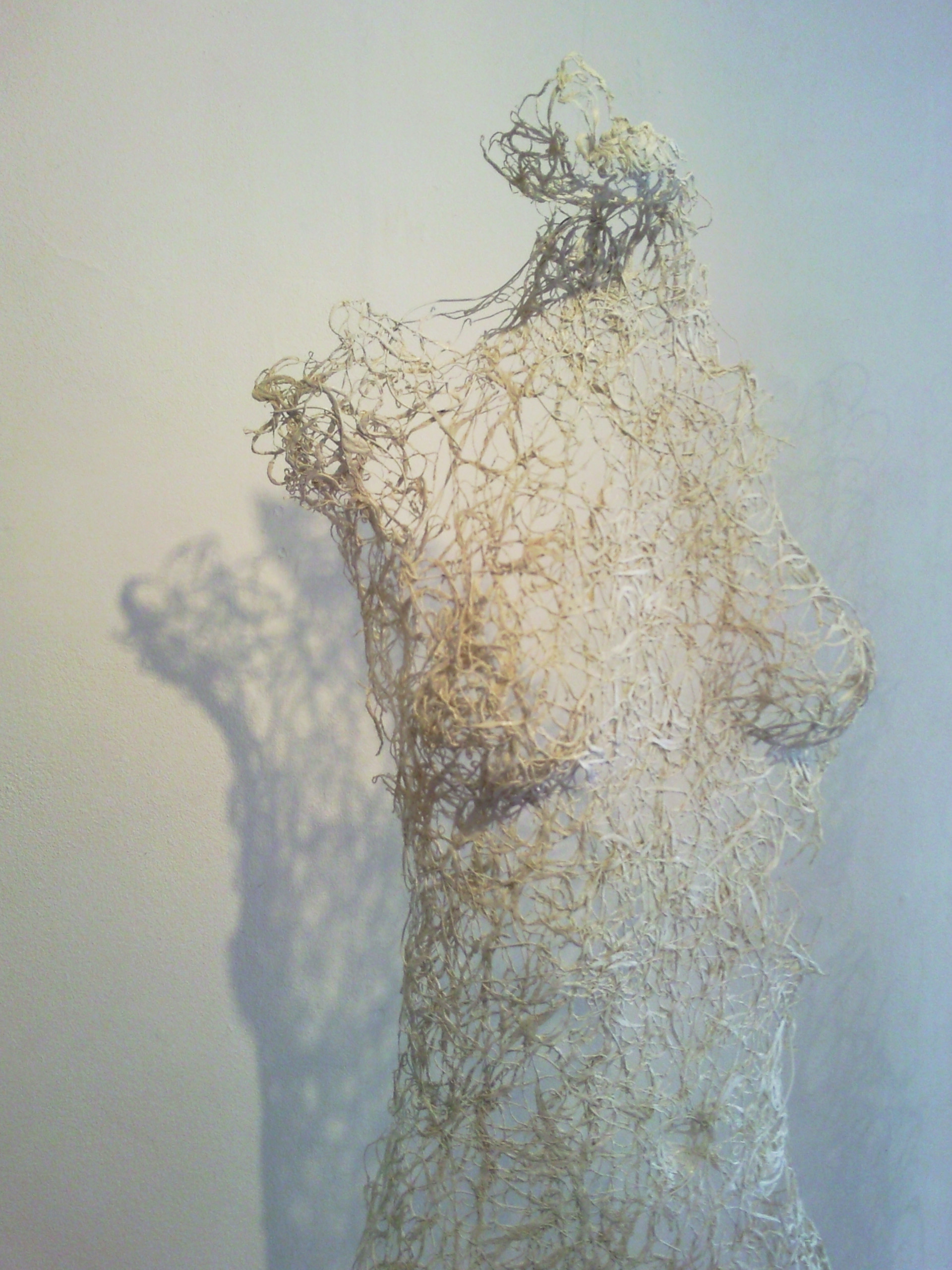
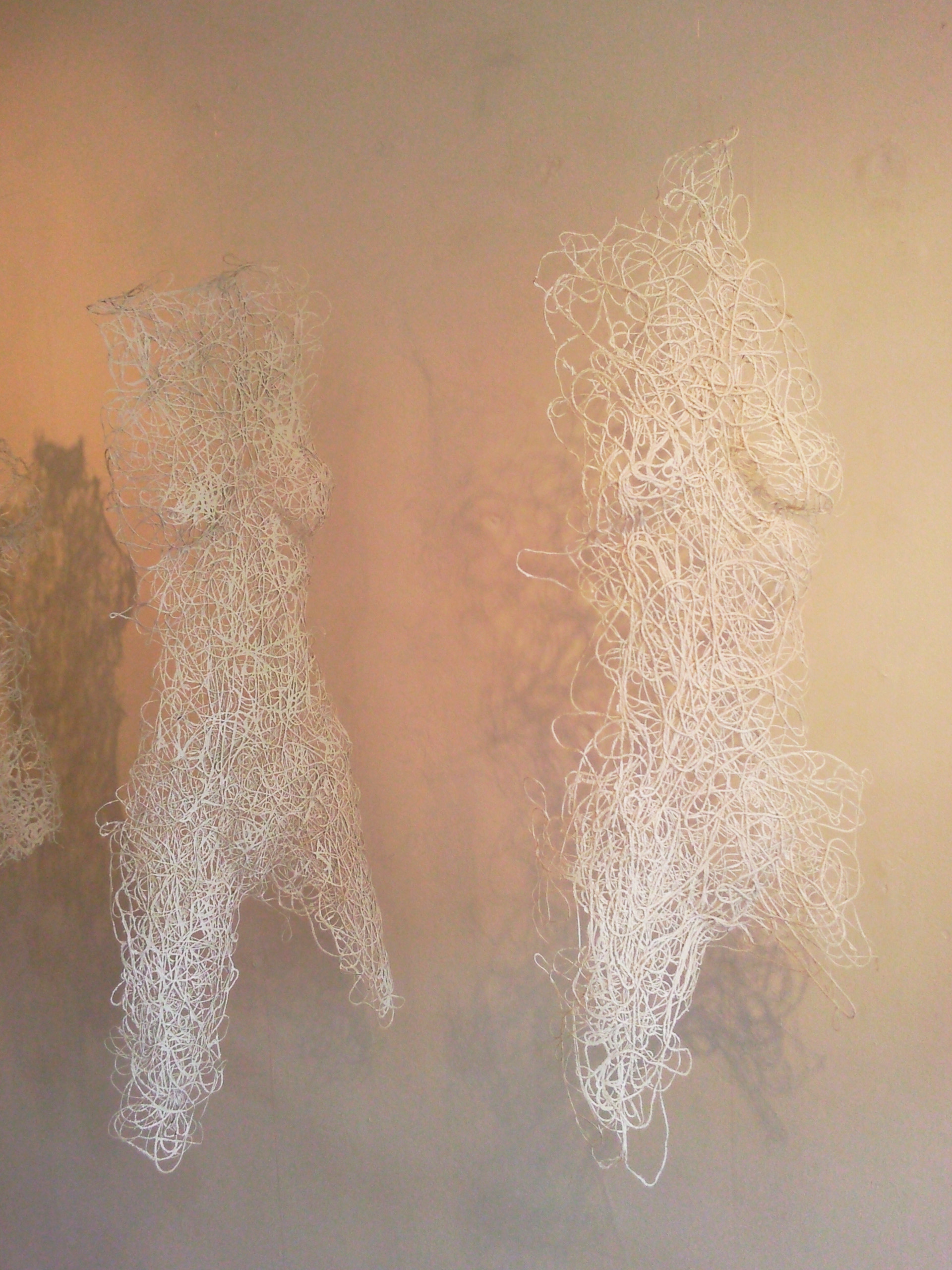
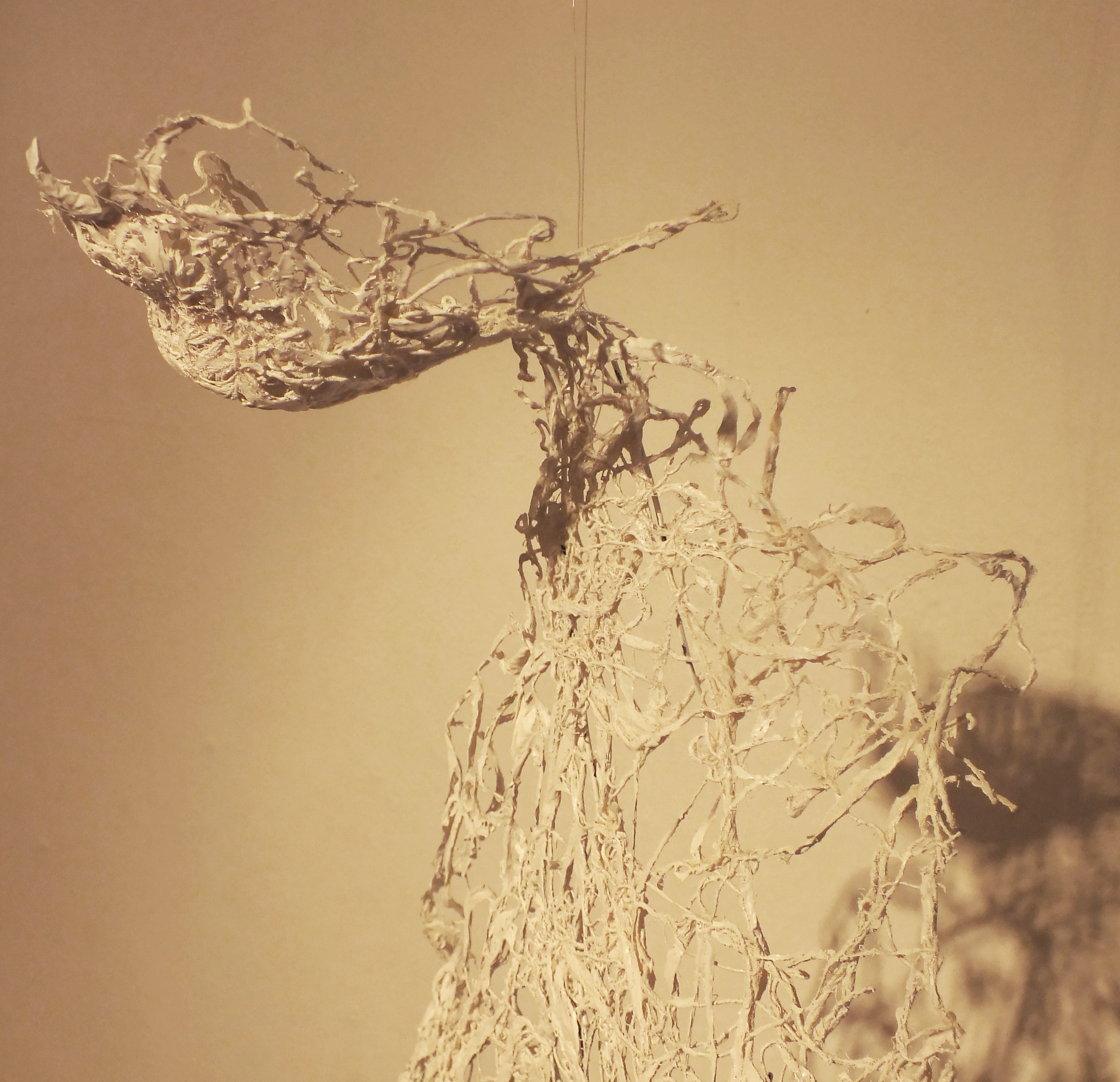
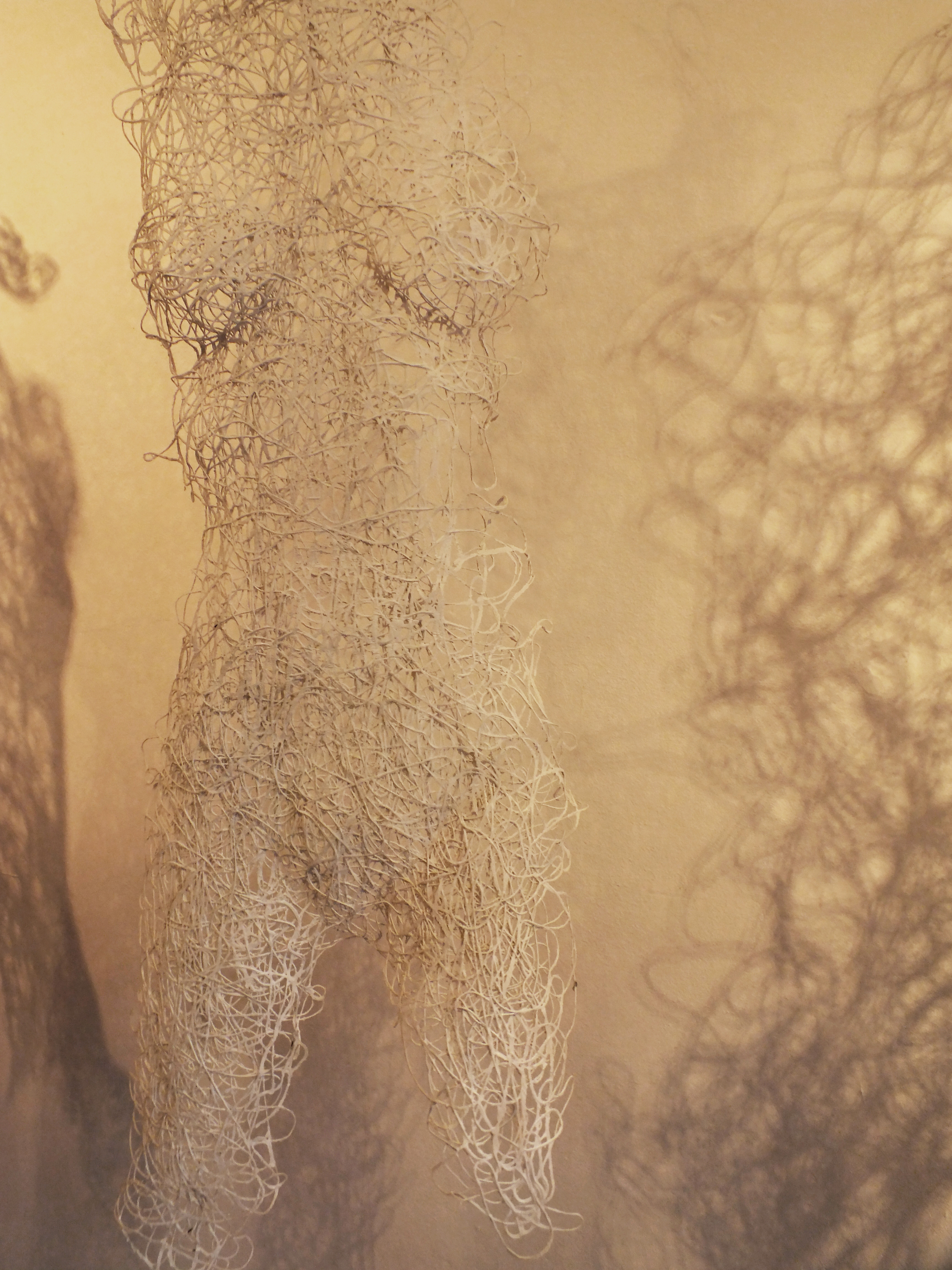
Trace: Máther (2016)
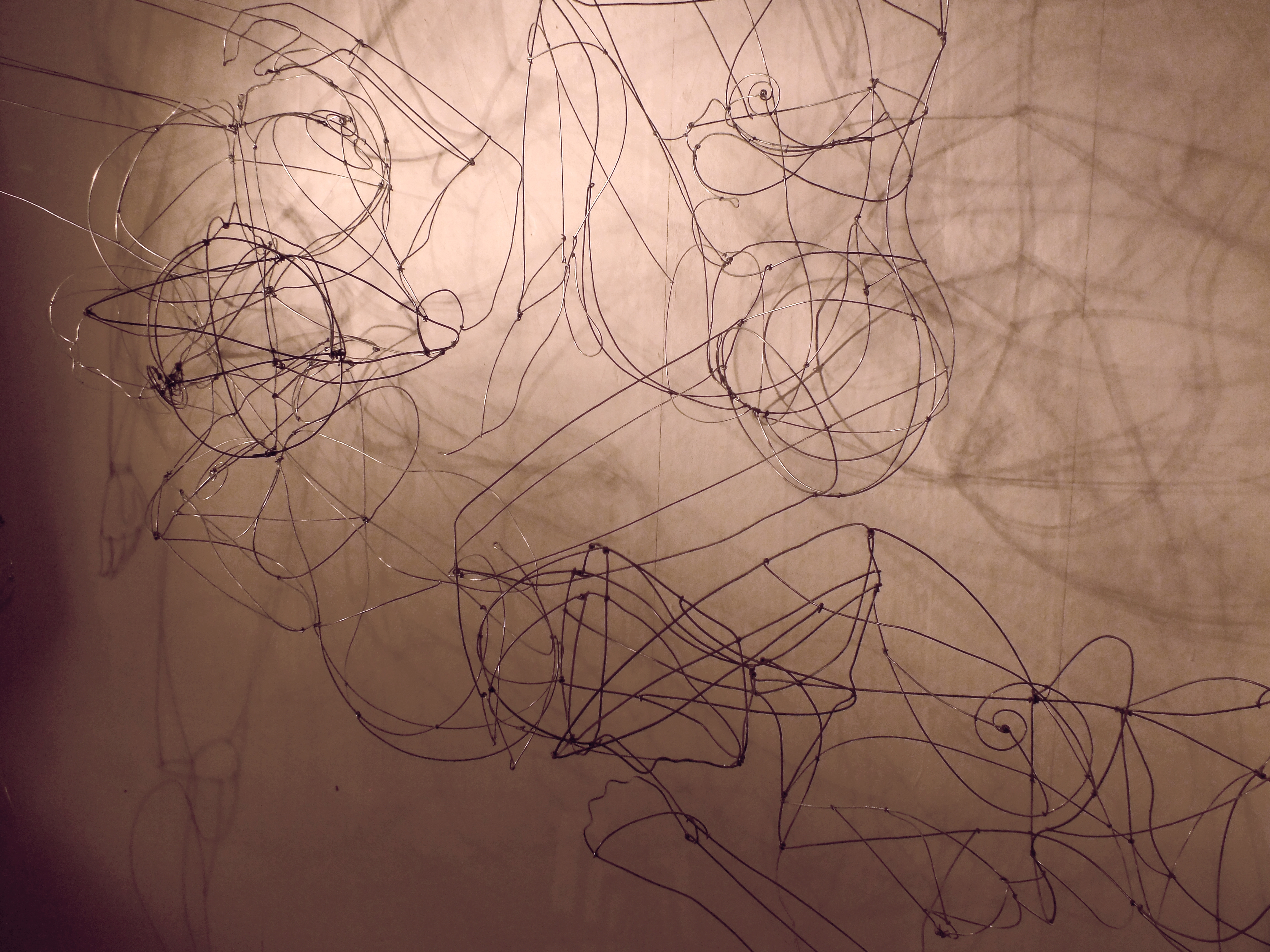
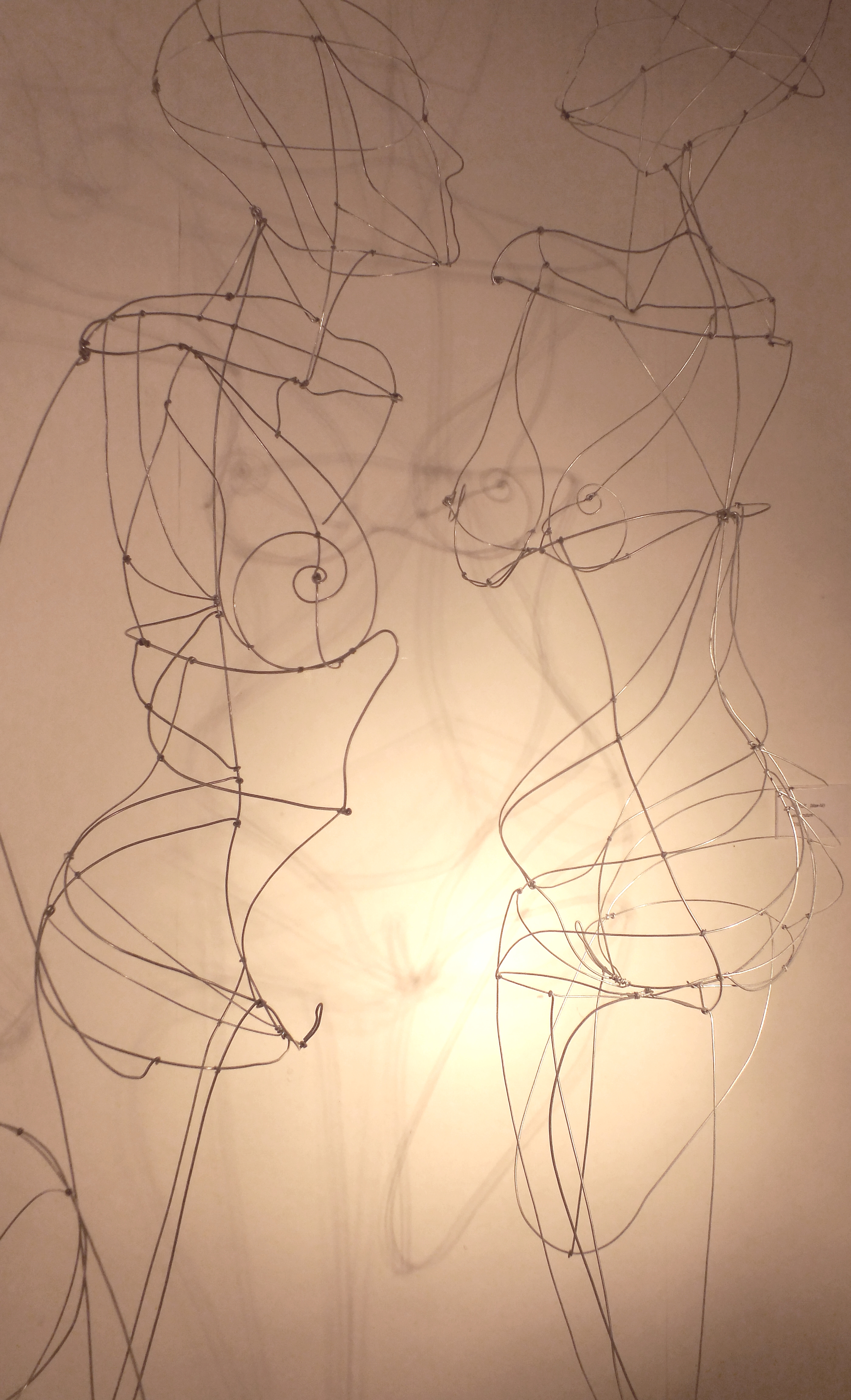
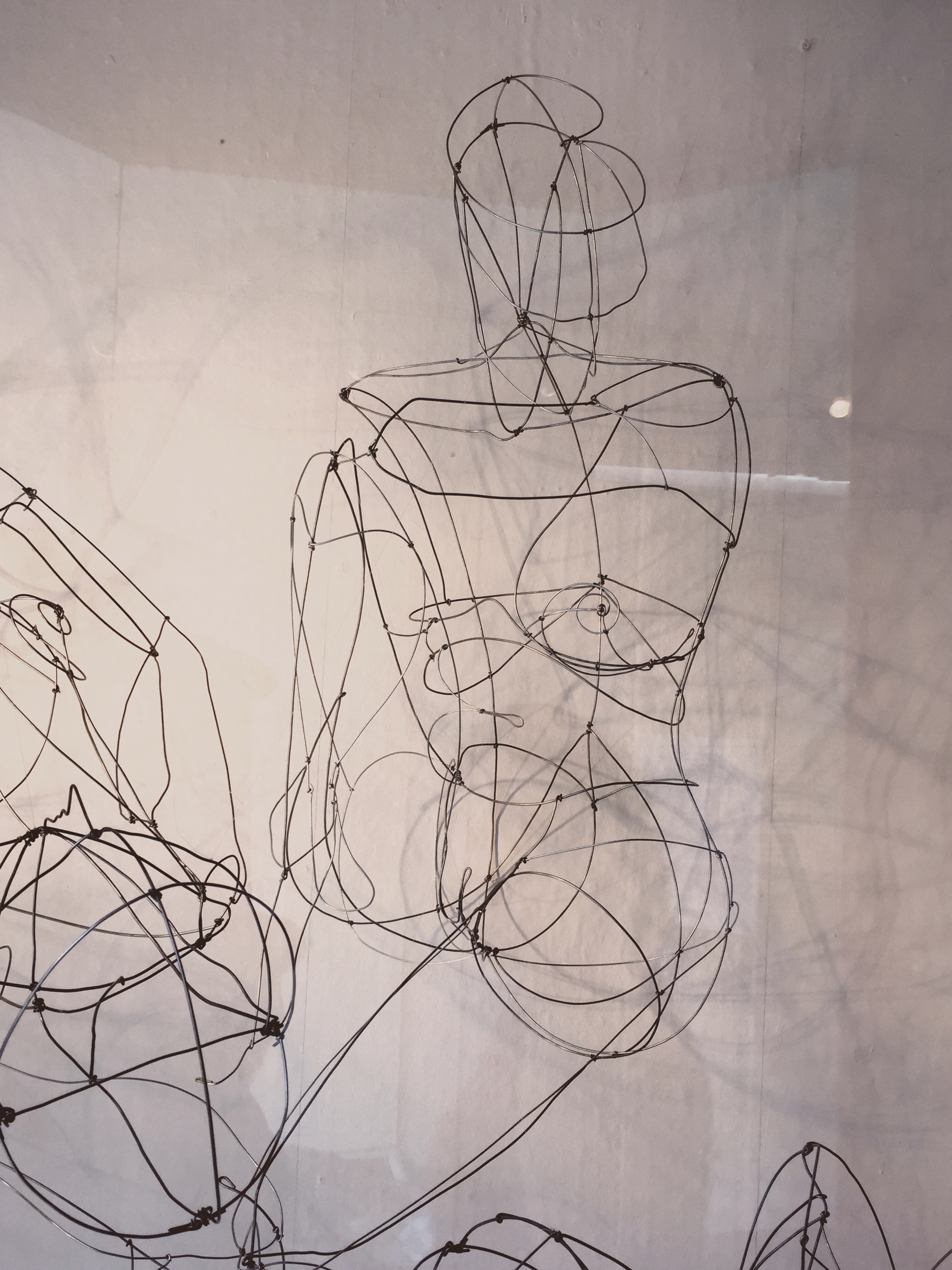
Wire Drawing – Sculpture Installation; stainless steel wire; approx. 60cm x 90cm
‘Máther’ meaning mother in Irish. With these works I revisited original drawings and imagery to create 3-D figurative sculptural drawings in steel wire. Light and shadow are integral factors of the work. They explore ideas of the linear elements of our maternal history and how elemental it is in the make up of who we are. (Created from sketches for ‘Lace’ works from 2009)

Resonance the Being (2013)
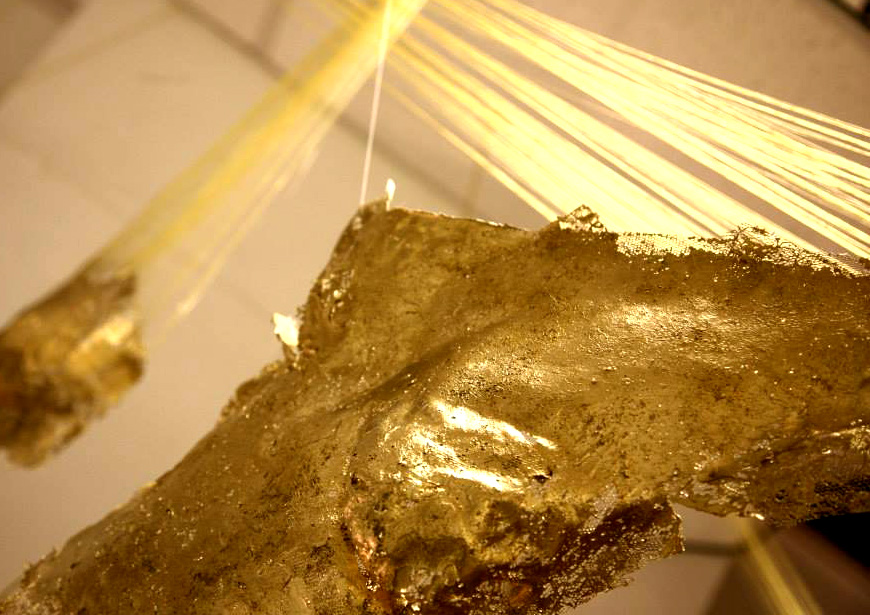
Lace Works Installation; gold lace body casts, gold string; approx. 40cm x 80cm
A exhibition with sound artist Jamie Sturrock. Working with themes of purity and pattern through the common metaphor of gold thread our works converged in the space to create to an ethereal, dreamlike atmosphere of sound and vision. Through the metaphor and medium of gold thread we explored ‘the celestial’, related it to the spark of neural transmitters firing and grounded it in feminist discourse.


Lace (2009)
Glass Etching Installation: glass panels x 3, wood framing, hanging light source; (glass work) 95cm x 170cm
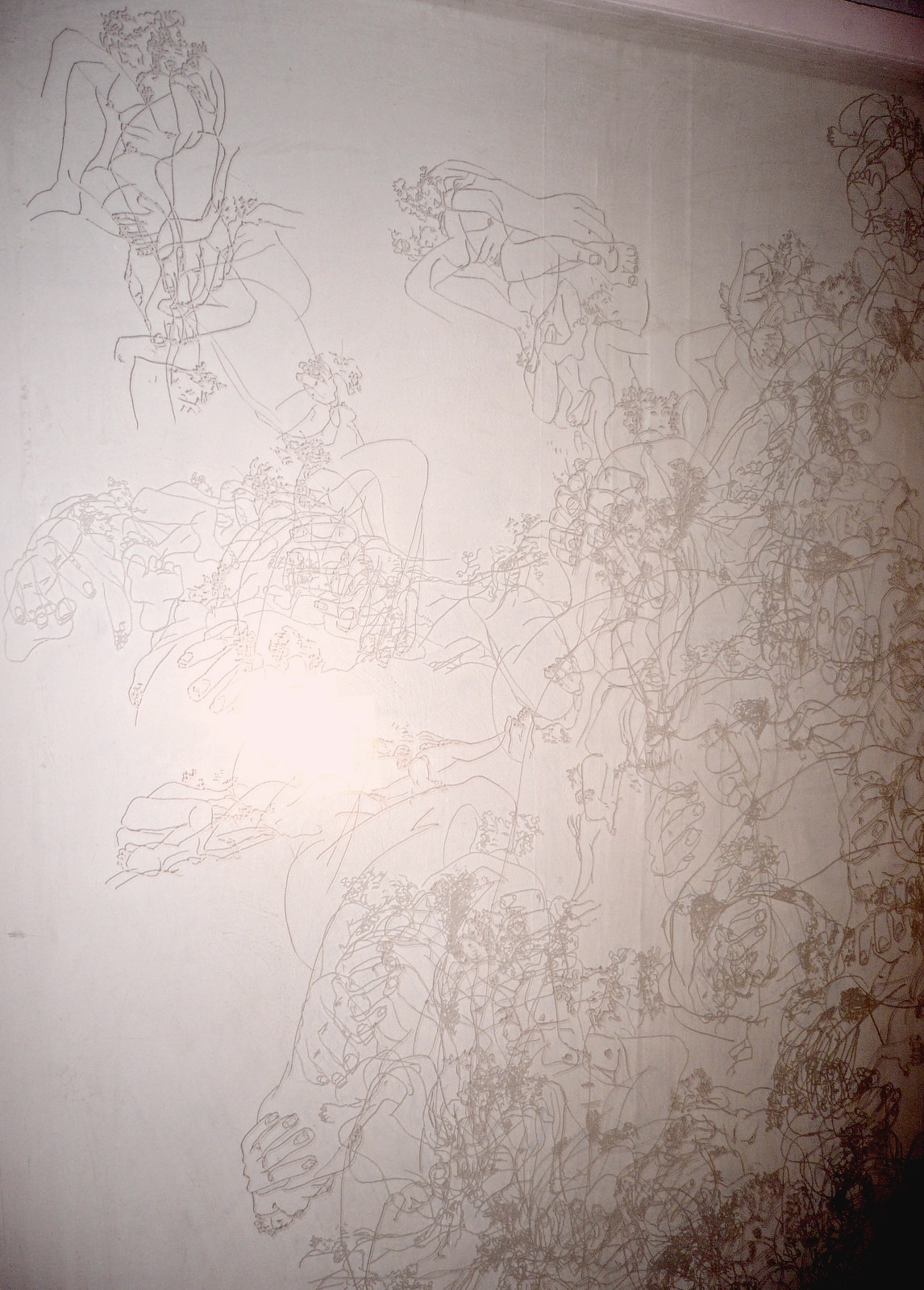
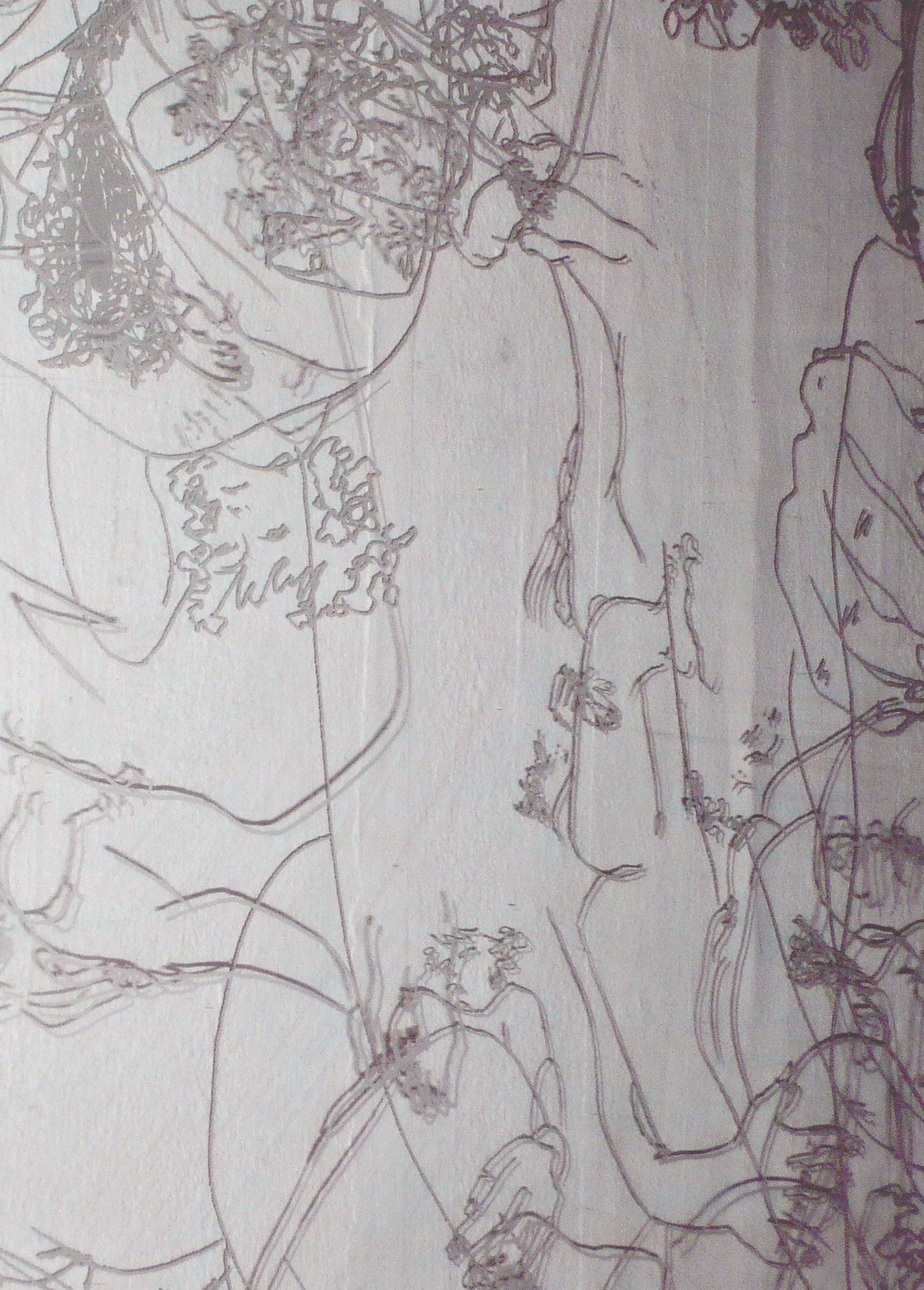
Lace follows themes of femininity, body-dysmorphic representation, personal history and lineage. This body of work consists of drawn glass etching on large, layered glass pieces. Shadow and light make lace-like floating figurative drawings. “Lace” has been instrumental in the themes of following works.


 Emma Clear